

Giovanni Francesco Pressenda 1837
Giovanni Francesco Pressenda was born on January 6, 1777, in Bourdia, near Lequio Berria in the province of Cuneo, Piedmont.
Born into a farming family, he is believed to have spent much of his early life engaged in agricultural work. At the same time, he was known to possess a deep interest in music and is said to have been an amateur violinist himself.
Around 1815, in the years following the Napoleonic Wars, Pressenda began his formal training in Turin in the workshop of the French makers Nicolas Lété and Pirmann.
There he learned not only the craft of violin making itself, but also the modern French approach to workshop management and division of labor, which would later influence the structure and productivity of his own atelier.
After the death of Nicolas Lété in 1819, Pressenda remained in the workshop, eventually establishing his own atelier around 1821.
With the support of the celebrated violinist Giovanni Battista Polledro and the influential musical figure Giuseppe Gebaro, his reputation grew rapidly throughout Turin and beyond.
Pressenda later welcomed highly skilled collaborators and pupils into his workshop, including François Calot, Pierre Pacherele, and Giuseppe Rocca, establishing one of the most important violin-making centers in 19th-century Italy.
At the time this violin was made, in 1837, Turin was flourishing as a major cultural center of the Kingdom of Savoy, prior to the unification of Italy.
The city possessed a unique artistic atmosphere in which French refinement and Italian tradition coexisted in remarkable harmony. Within this environment, Pressenda had firmly established himself as one of the leading violin makers of 19th-century Italy, attracting commissions from prominent musicians and members of the aristocracy alike.
Across Europe, concert culture was rapidly expanding during this period, and musicians increasingly required instruments capable of projecting clearly in larger performance halls.
Pressenda’s instruments answered these demands with remarkable success, combining a focused, powerful core of sound with exceptional projection and carrying power. For this reason, his works continue to be highly esteemed by performers today.
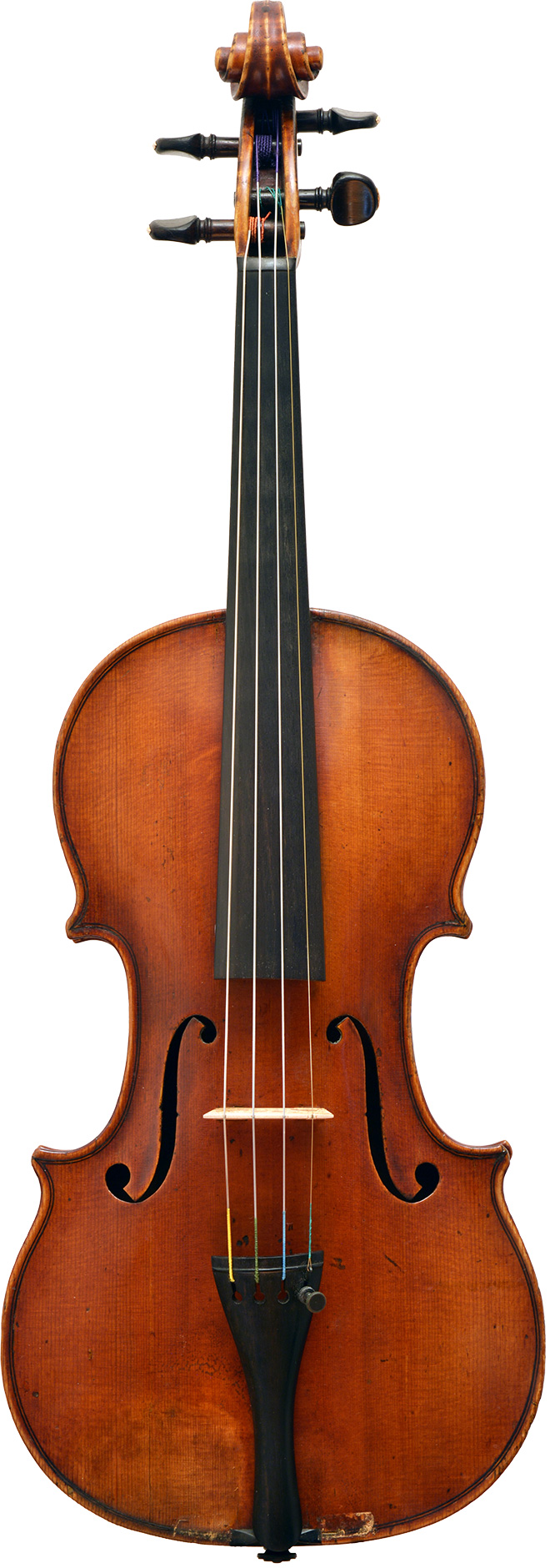
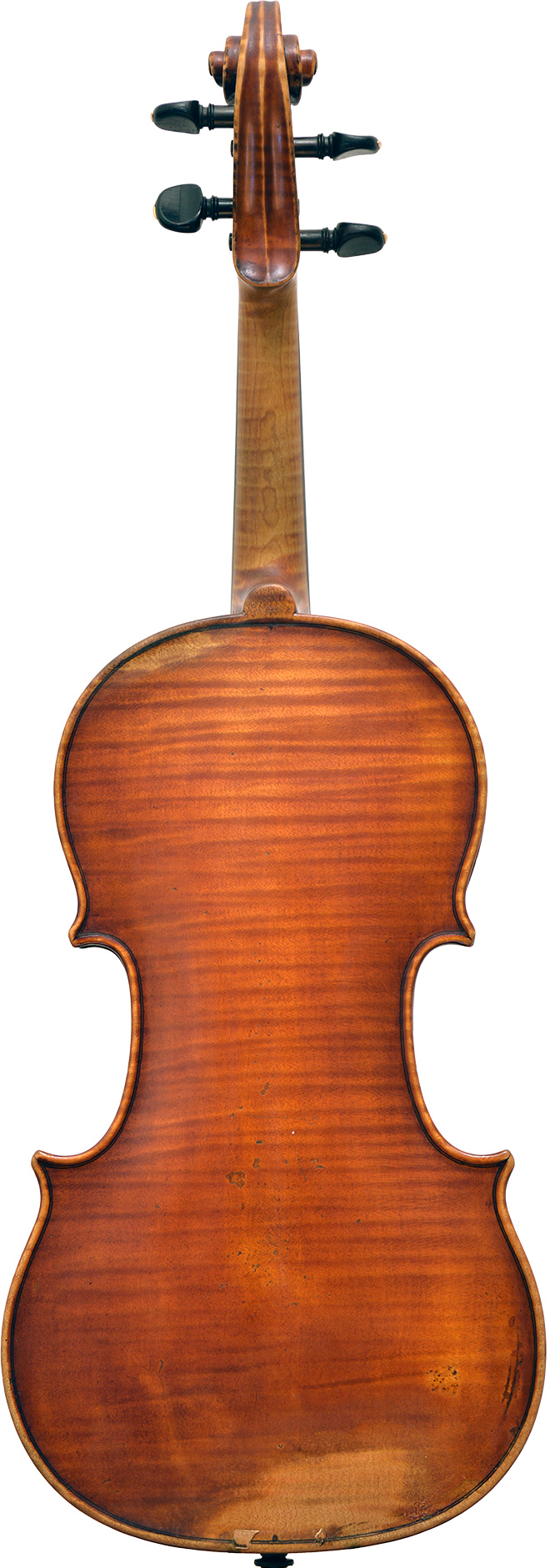
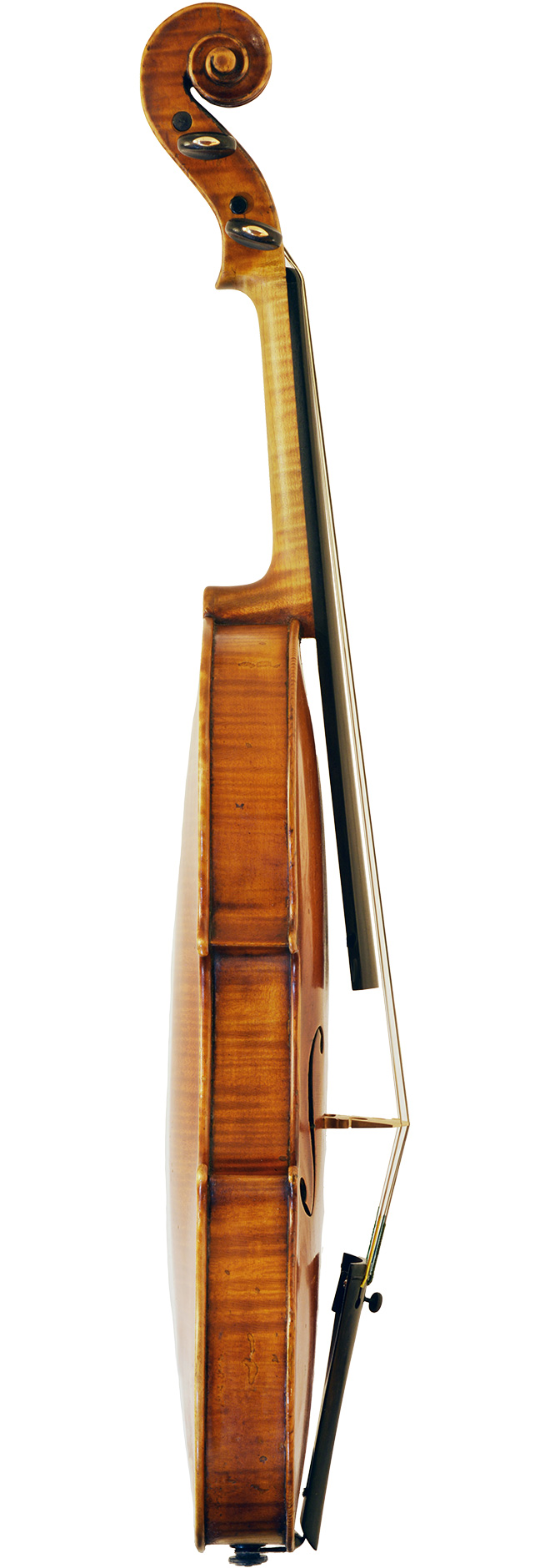
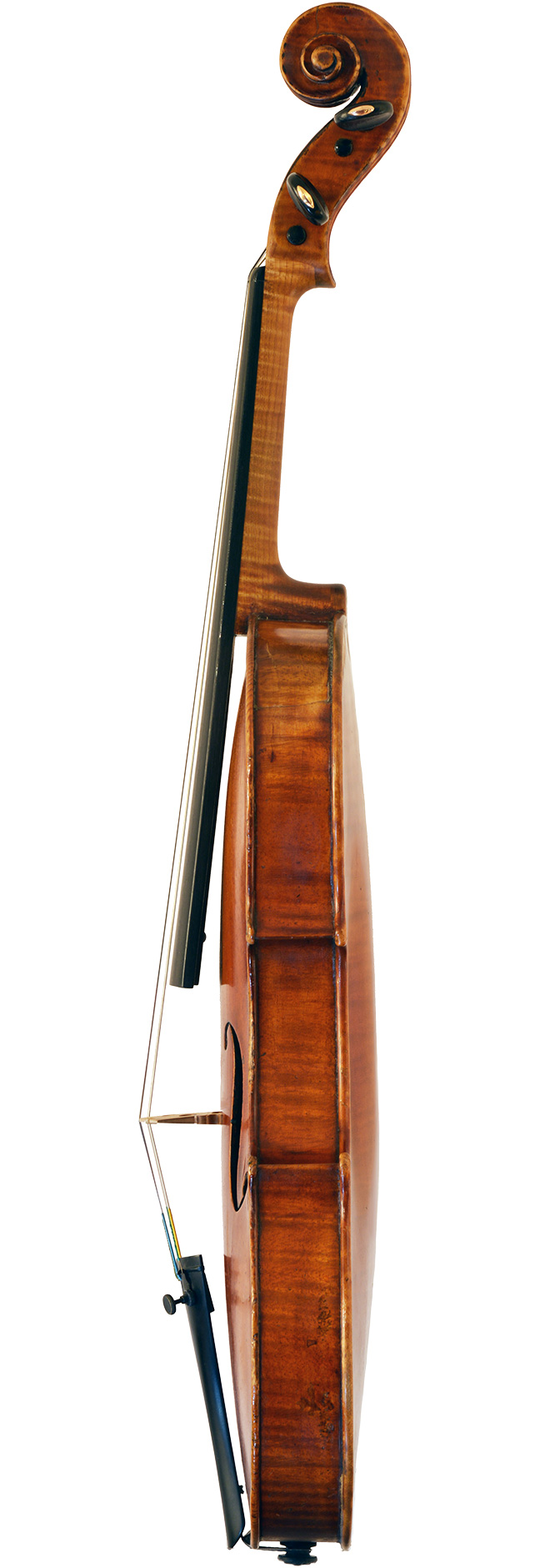
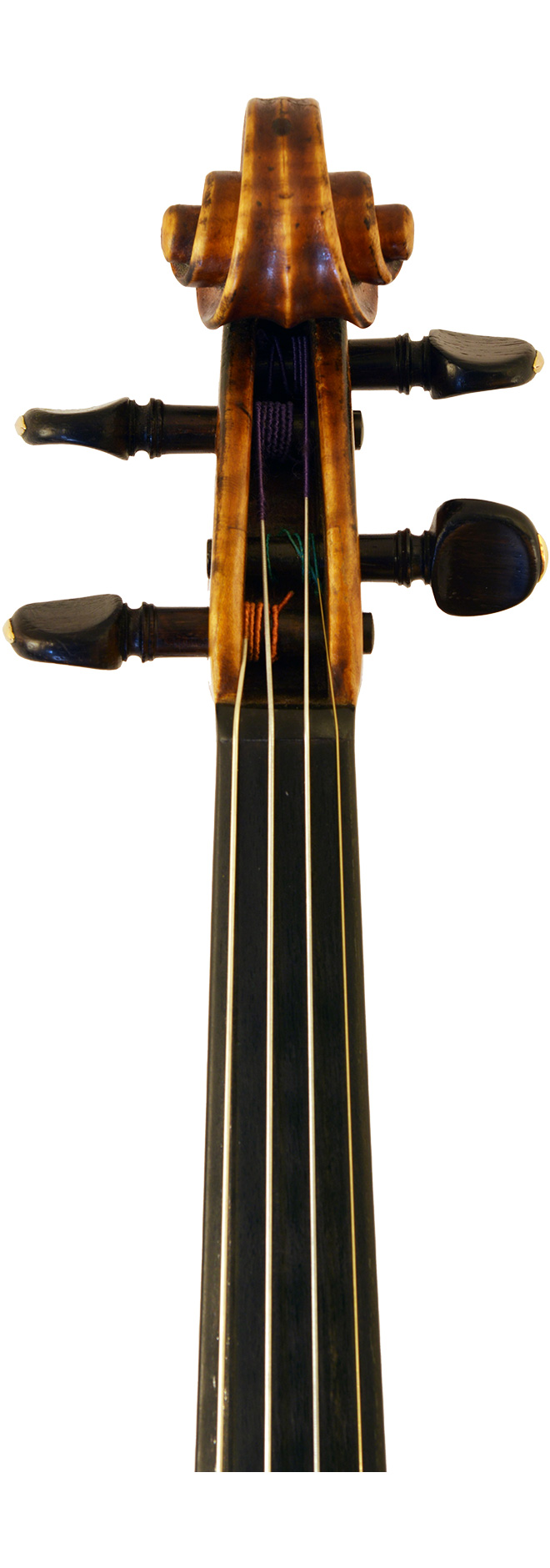
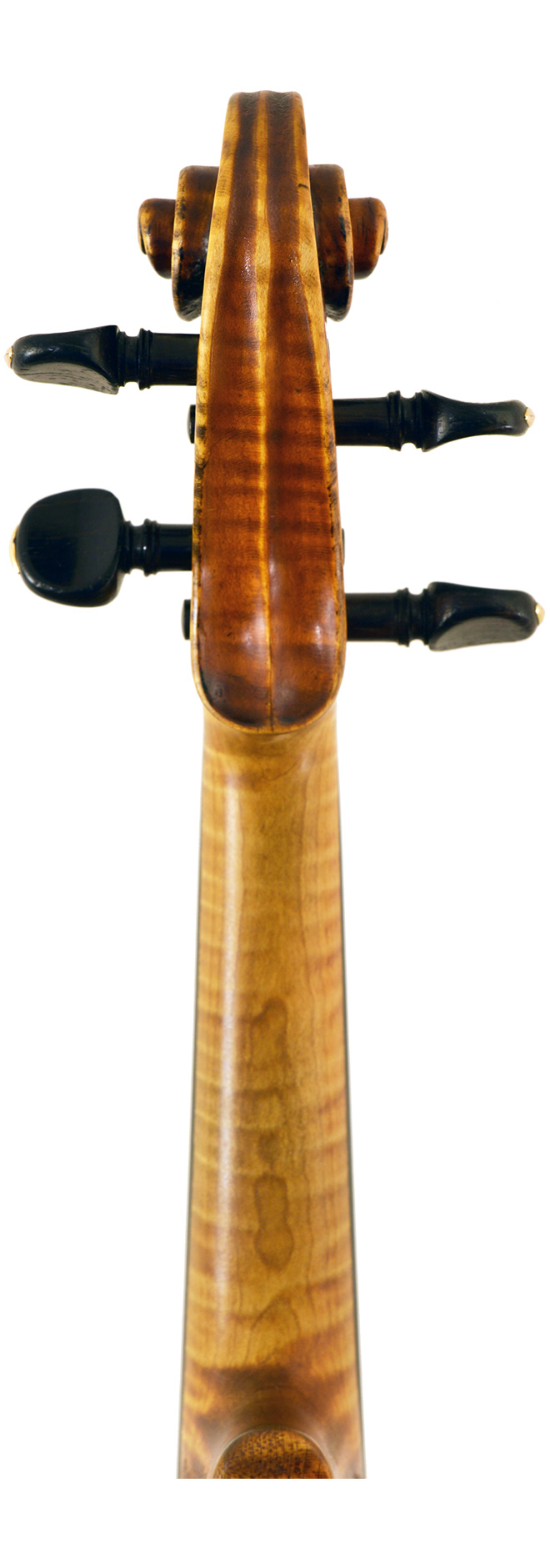
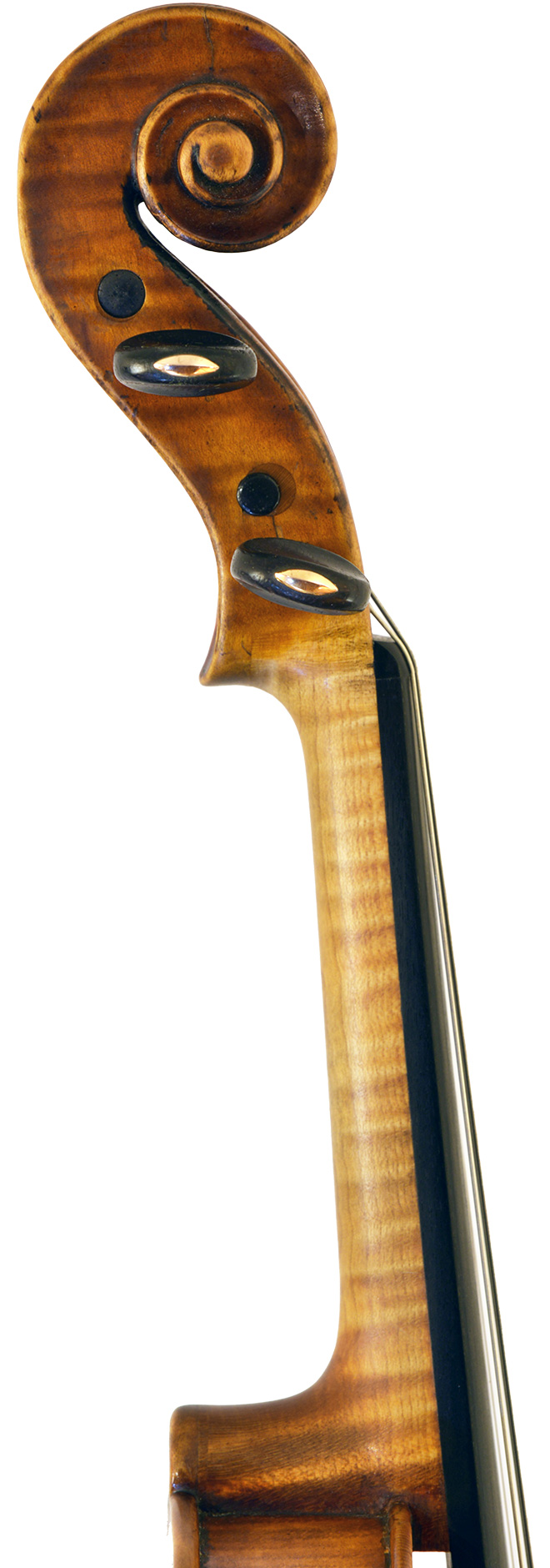
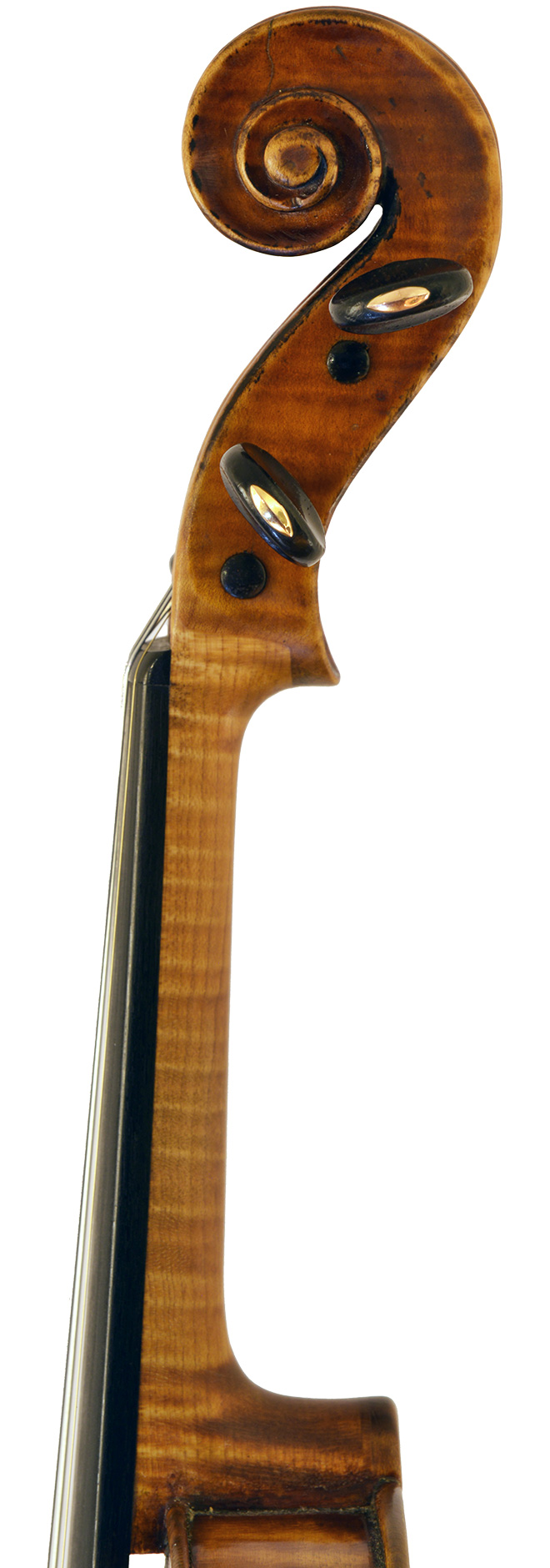
This particular violin displays a slightly elevated arching and a rich sense of internal tension, while its deep red-brown varnish blends beautifully into the wood beneath.
The back is fashioned from finely figured maple with elegant horizontal flame, and the scroll exhibits the strength and vitality so characteristic of Pressenda’s hand. The edgework and corners reflect the disciplined craftsmanship of the Turin school, avoiding excessive ornamentation in favor of a dense, sincere, and highly refined form.
The year 1837 represents far more than a simple date of manufacture; it marks the period in which Pressenda had fully established his mature personal style.
This violin stands as an important and highly valuable work, vividly conveying both the spirit of the Cremonese tradition revived in 19th-century Turin and the vibrant musical culture of its era.