

Dante & Alfredo Guastalla 1925
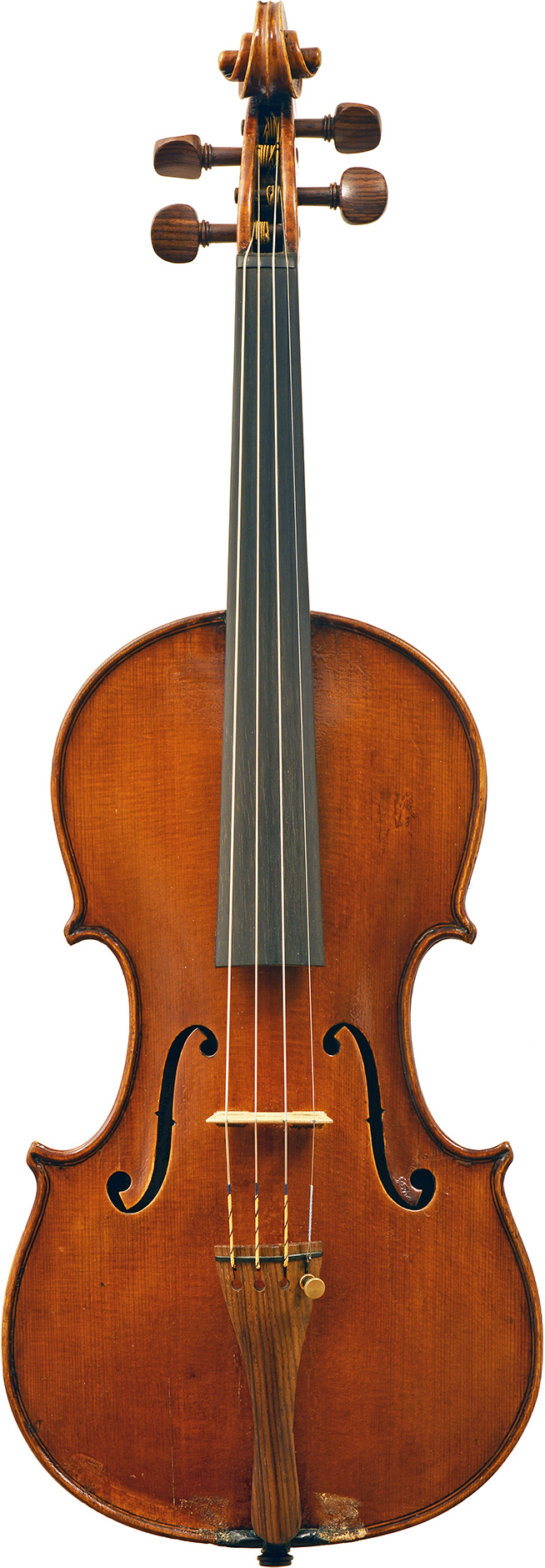
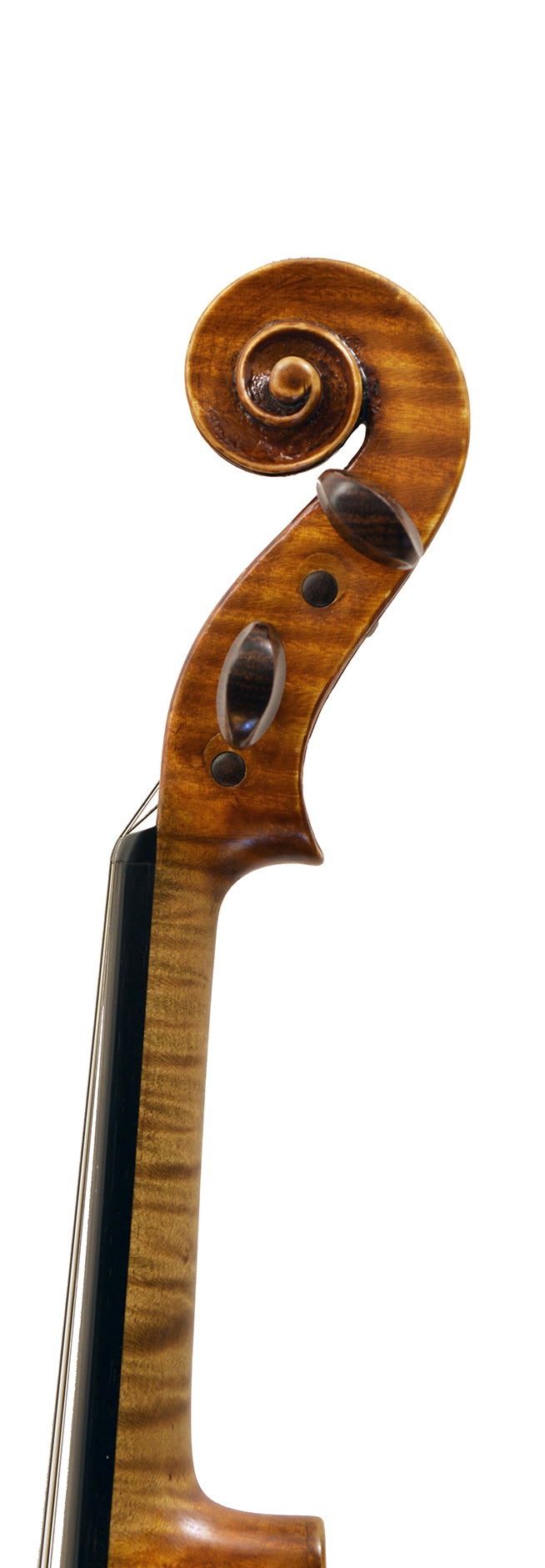
In the early 20th century, the Emilia region of Italy emerged as one of the areas where a distinctive violin-making culture was cultivated. While the classical traditions of Cremona were being rediscovered and re-evaluated, workshops throughout the provinces continued to pursue a practical and disciplined approach to craftsmanship. The Guastalla brothers worked within this very current.
They are generally regarded as belonging to the lineage influenced by the Mantua master, Stefano Scarampella.A philosophy that prioritizes structural clarity over ornamentation, and acoustic substance over theoretical refinement, quietly permeates this instrument as well.
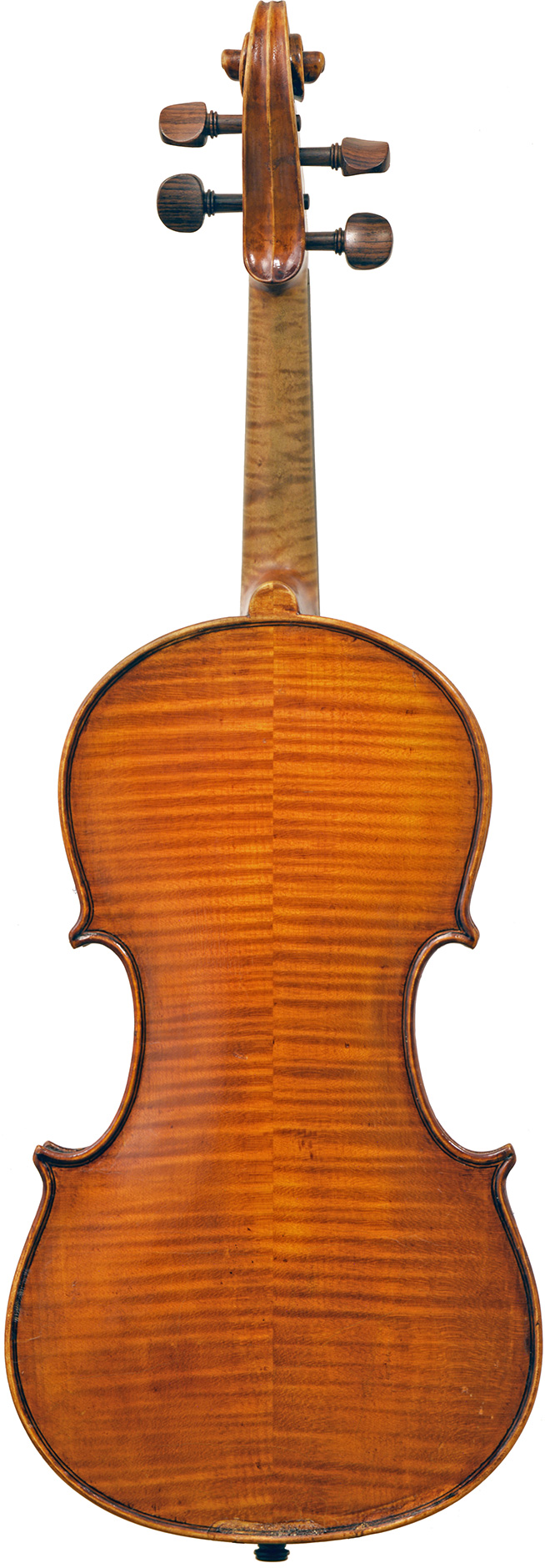
The back is fashioned from a beautifully figured maple, whose regular flame lends the instrument a refined and dignified appearance.
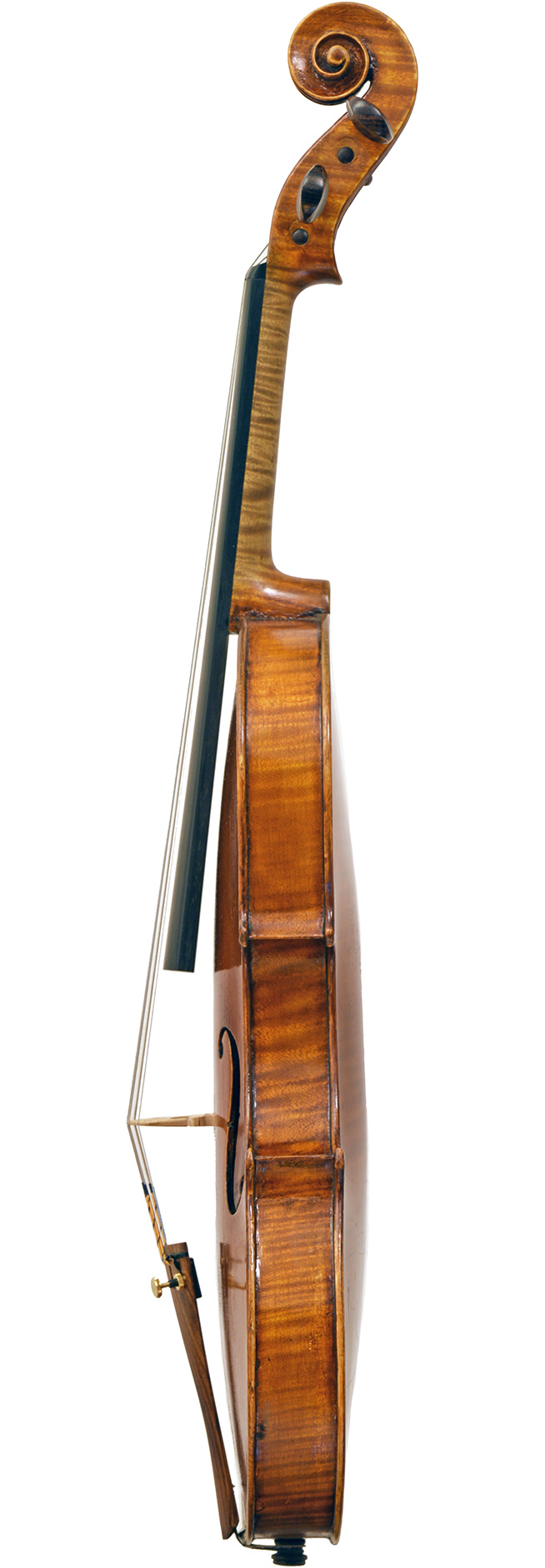
The arching rises naturally without exaggeration, and the edge-work remains composed and restrained, preserving the overall harmony of the design.
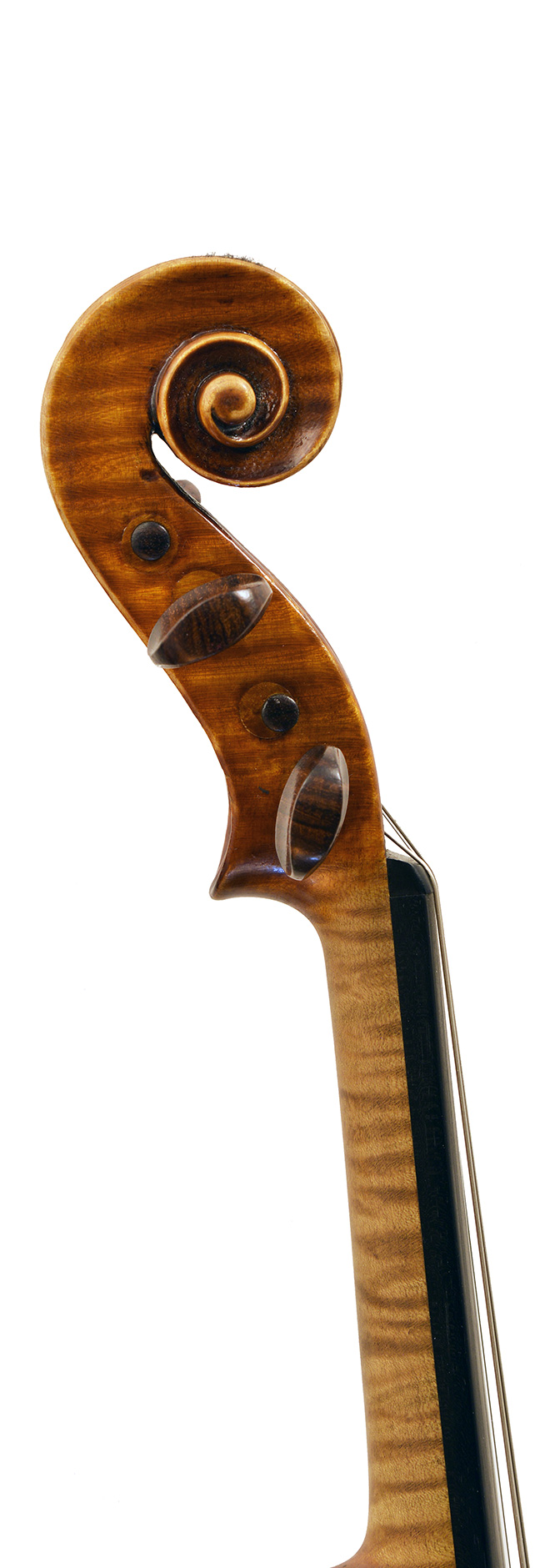
The scroll conveys an inner strength while maintaining a sense of order and balance. Though it reflects the influence of the Mantua school, it is tempered by a certain restraint and understated elegance.
Tonally, the instrument offers a measured depth and warmth in the lower register, with a well-balanced resonance throughout.
Rather than projecting an overly assertive character, it responds faithfully to the player’s expression, embodying a practical and versatile musical nature.
The year 1925 — when this instrument was made — also marks the year of Scarampella’s passing, a moment when the spirit of the Mantua school was transitioning to the next generation. As such, this violin stands as a quietly persuasive example of the maturation of Emilia’s regional craftsmanship during that transitional period.