

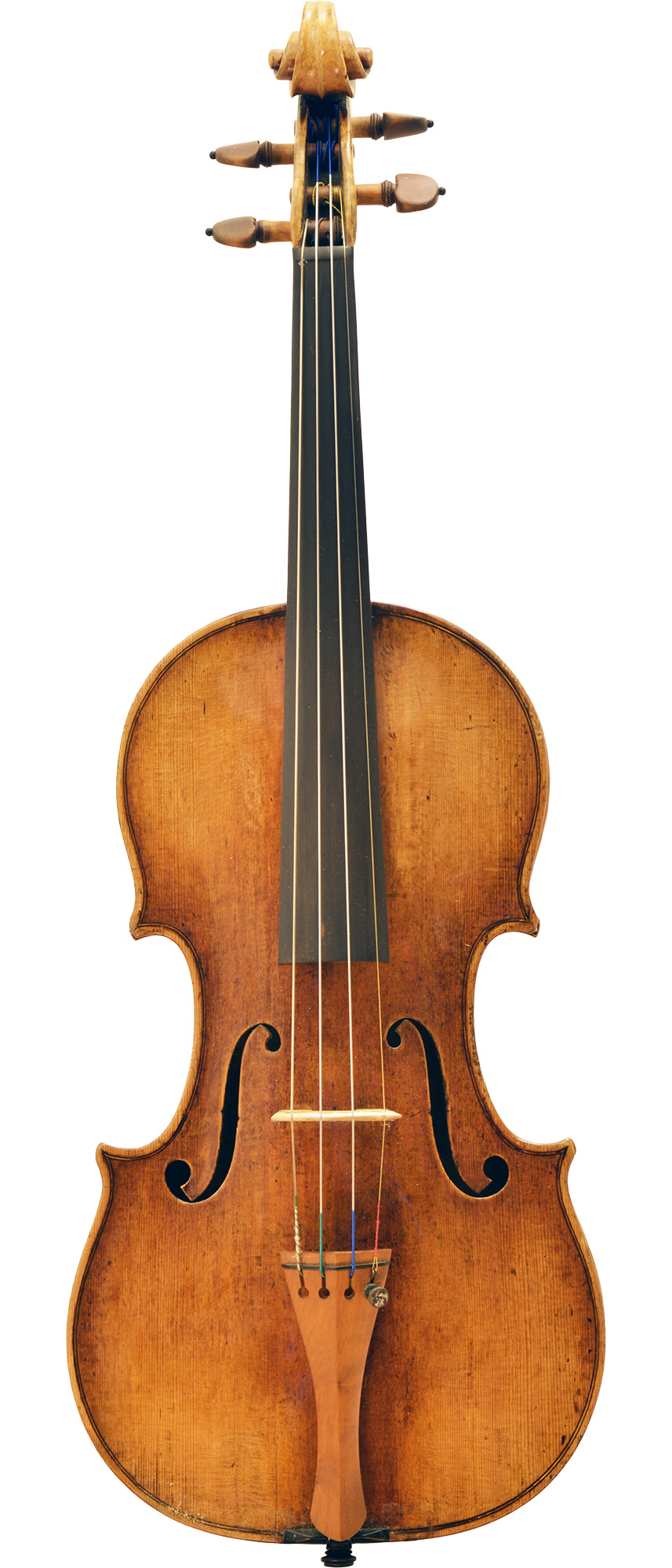
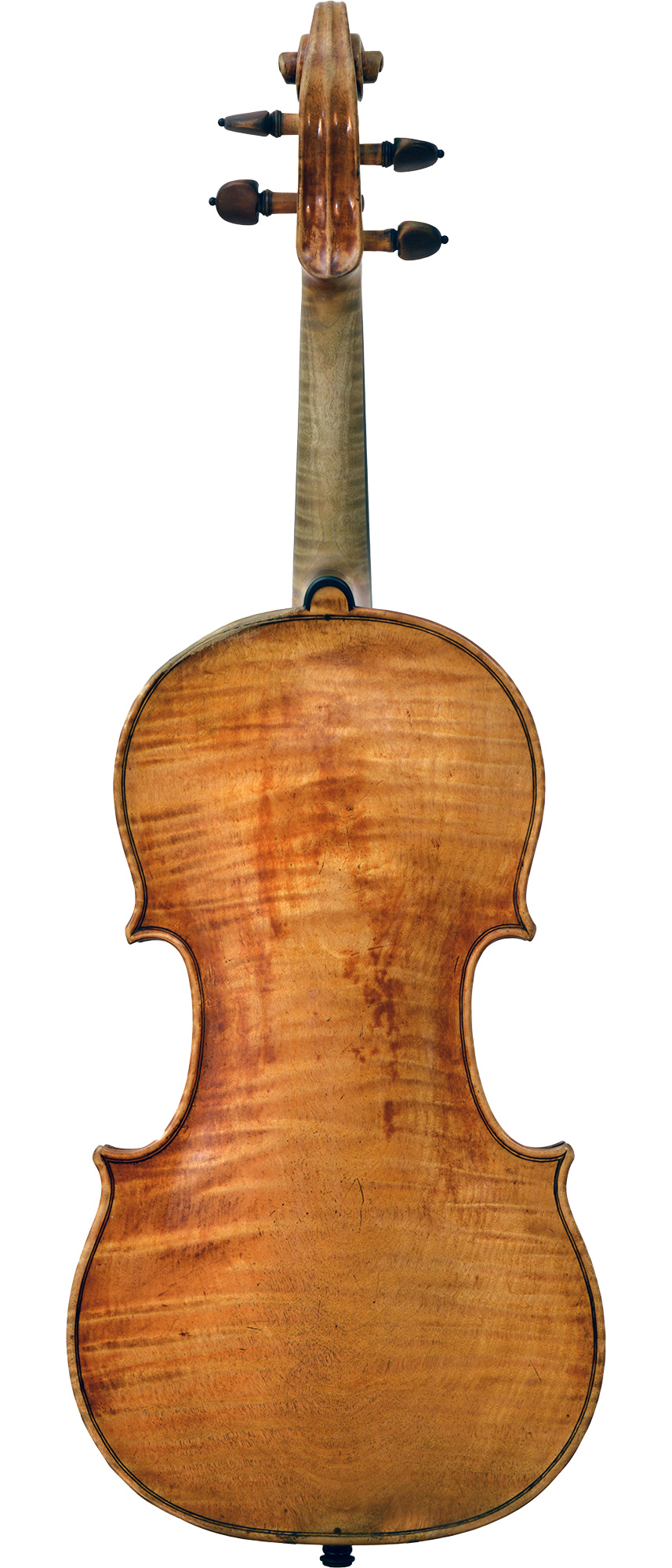
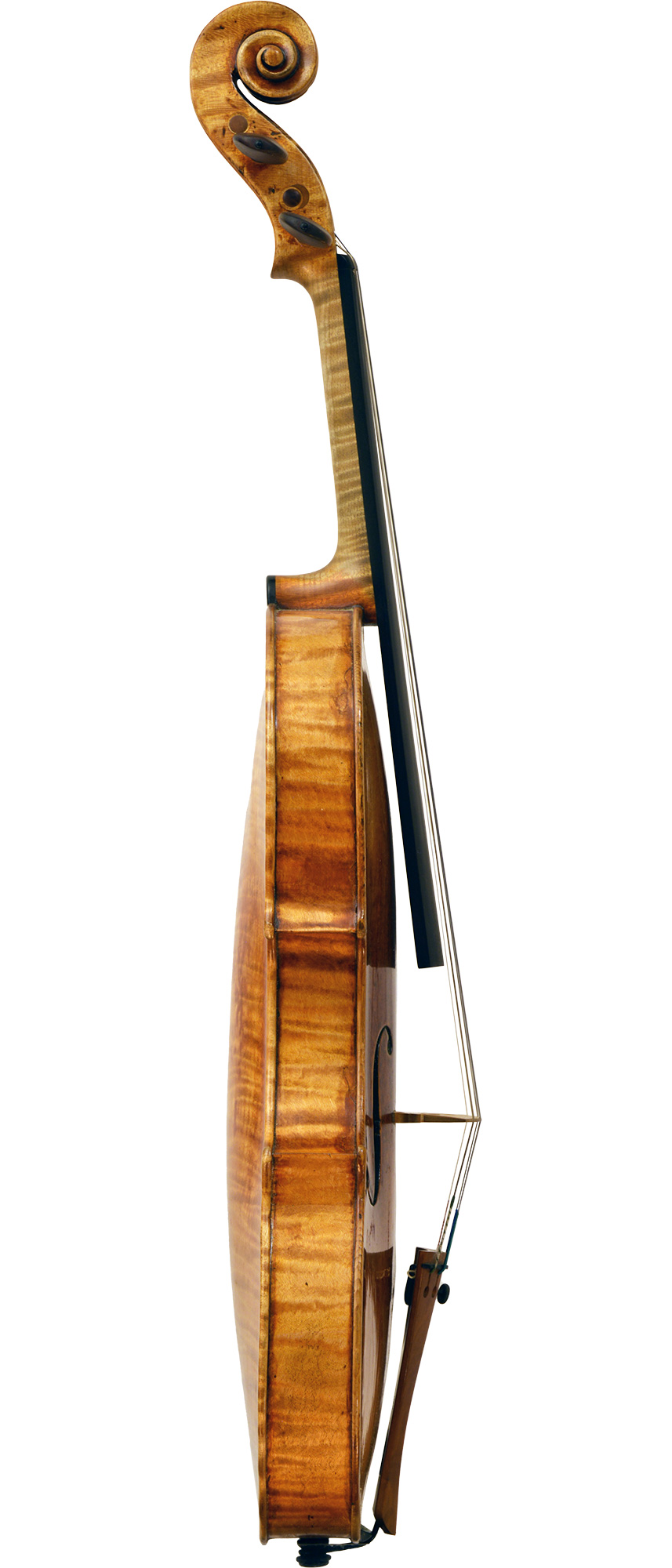
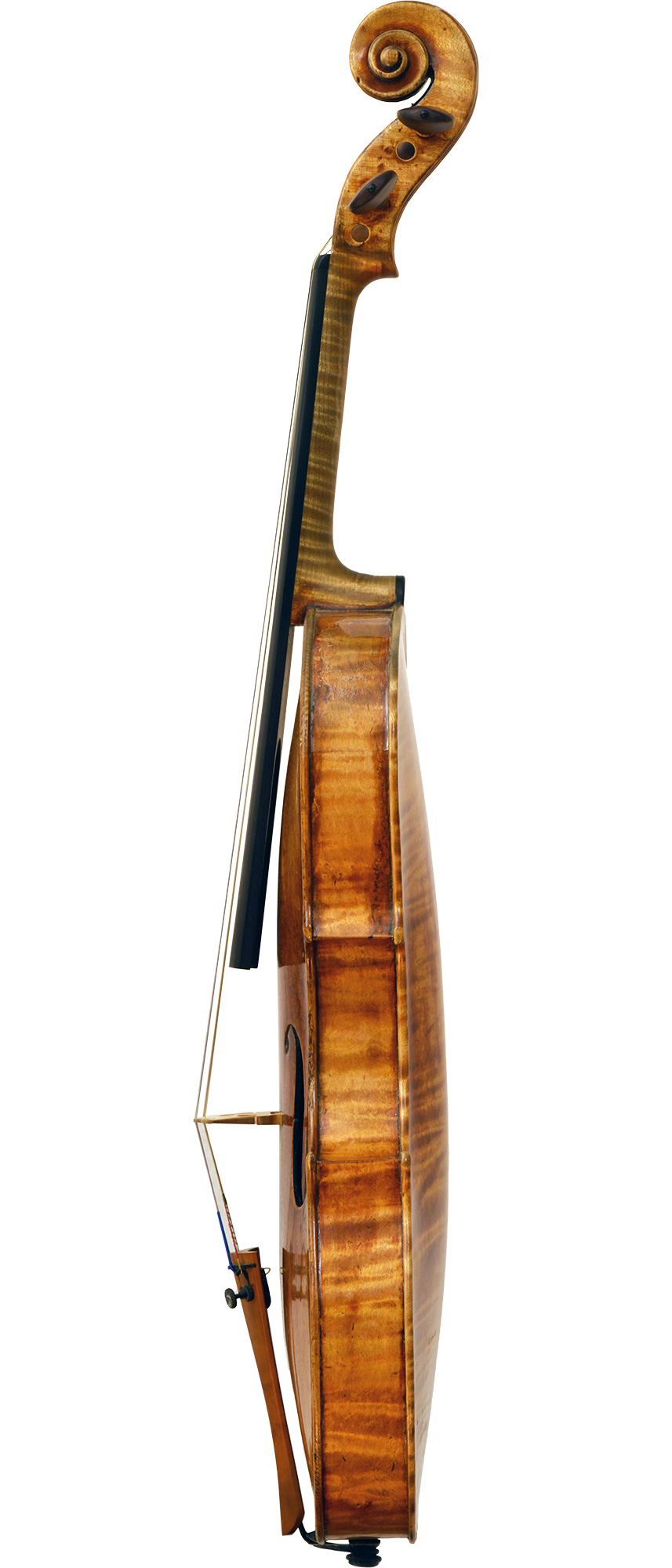
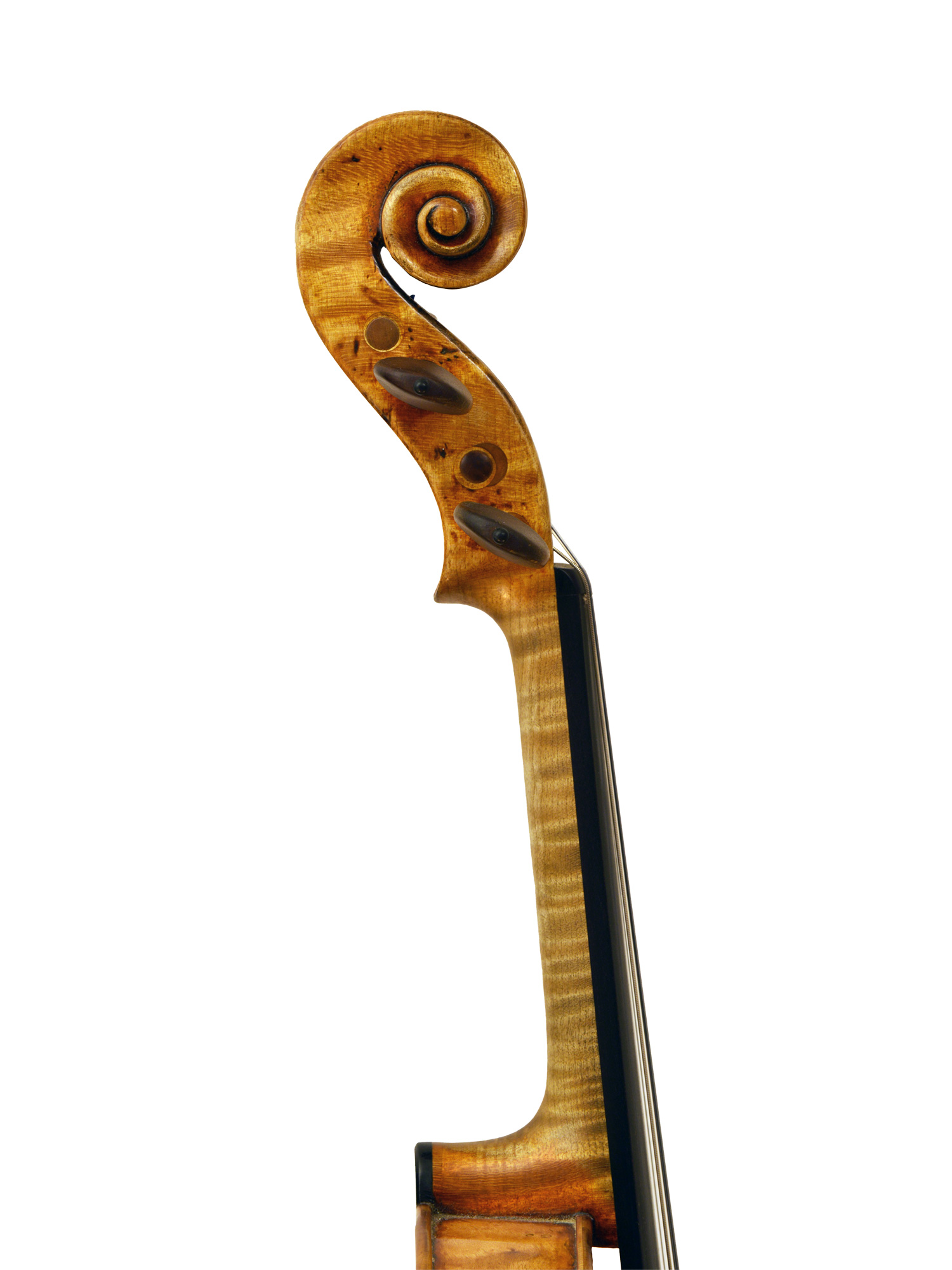
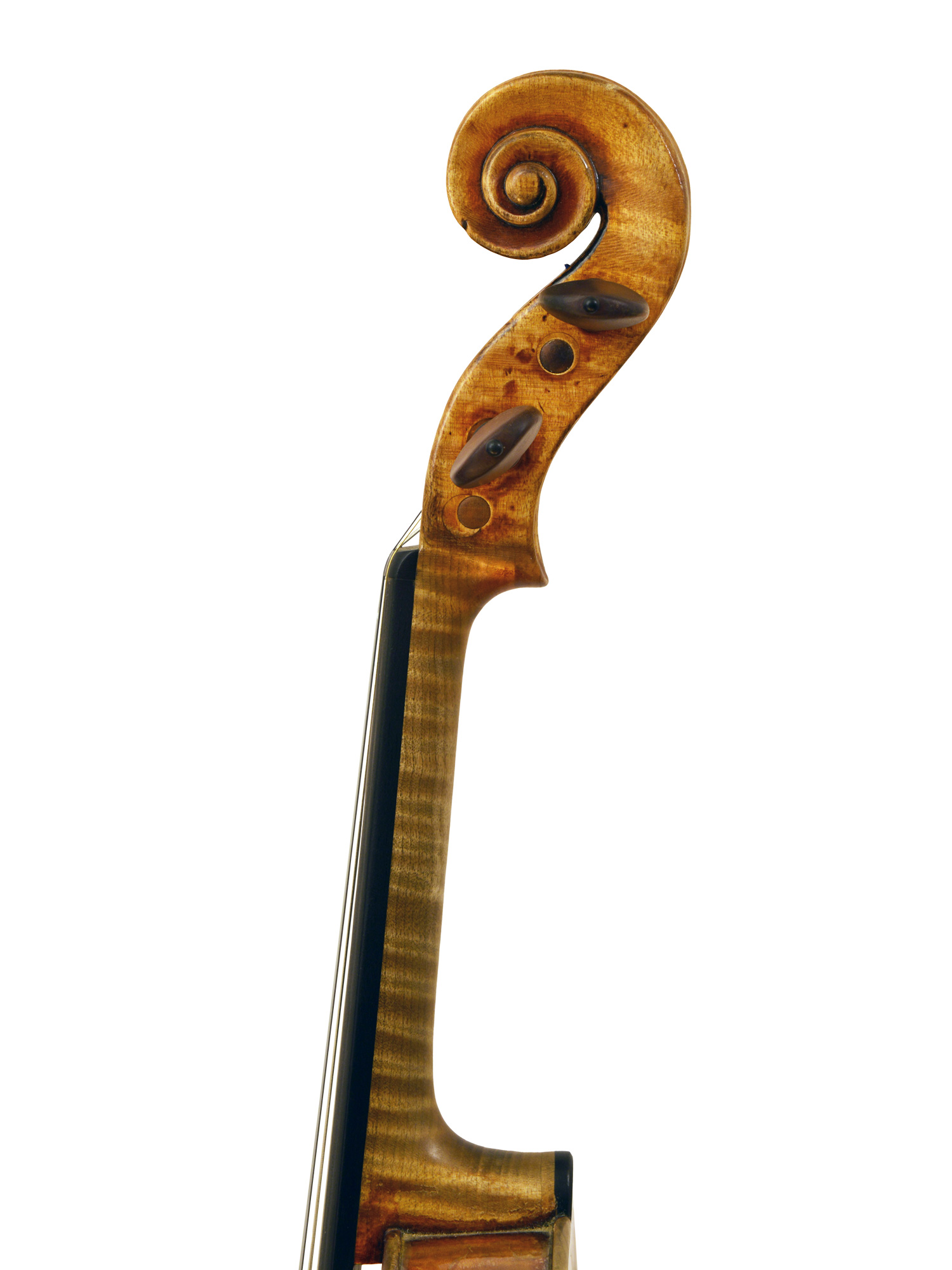
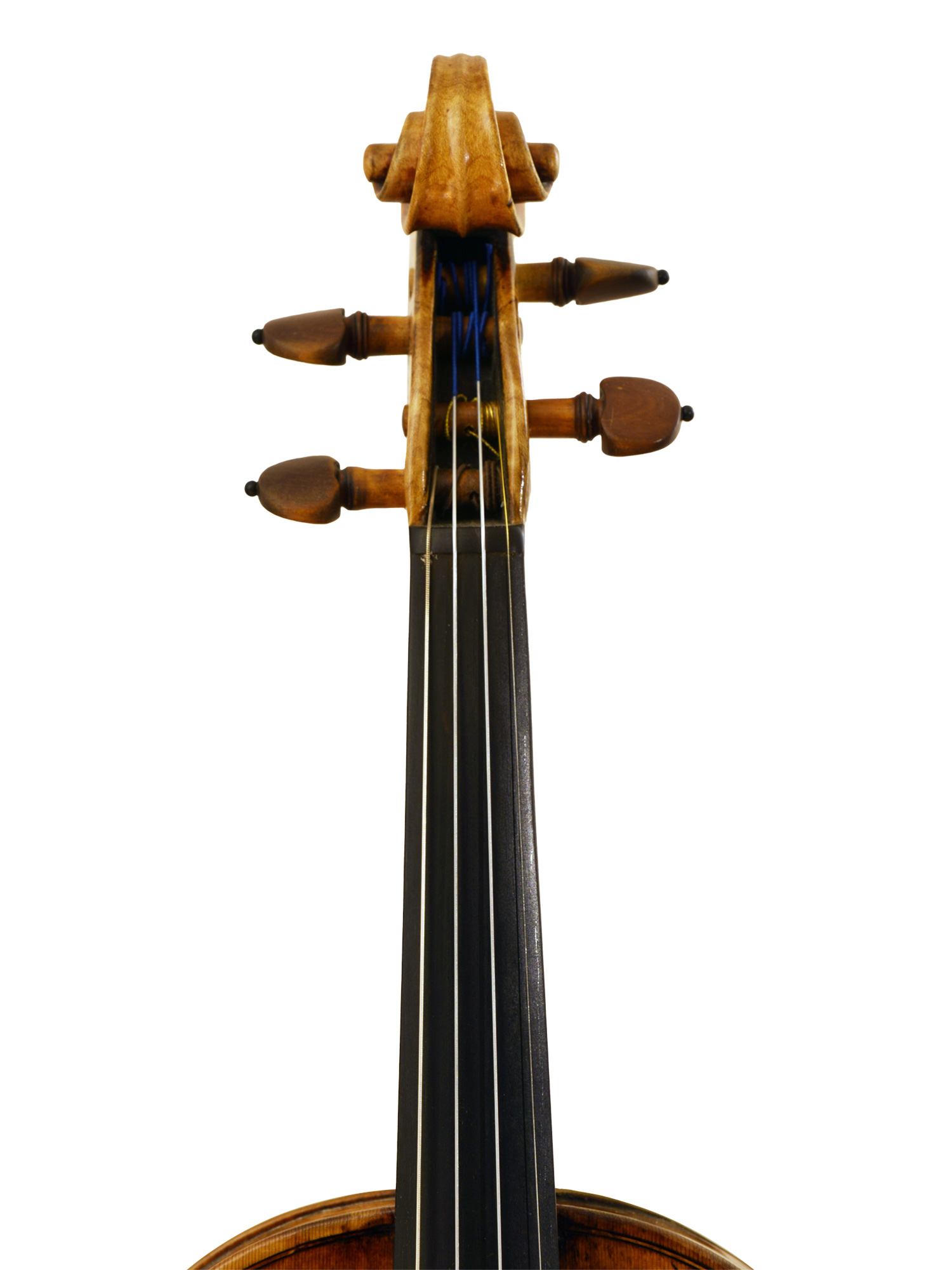
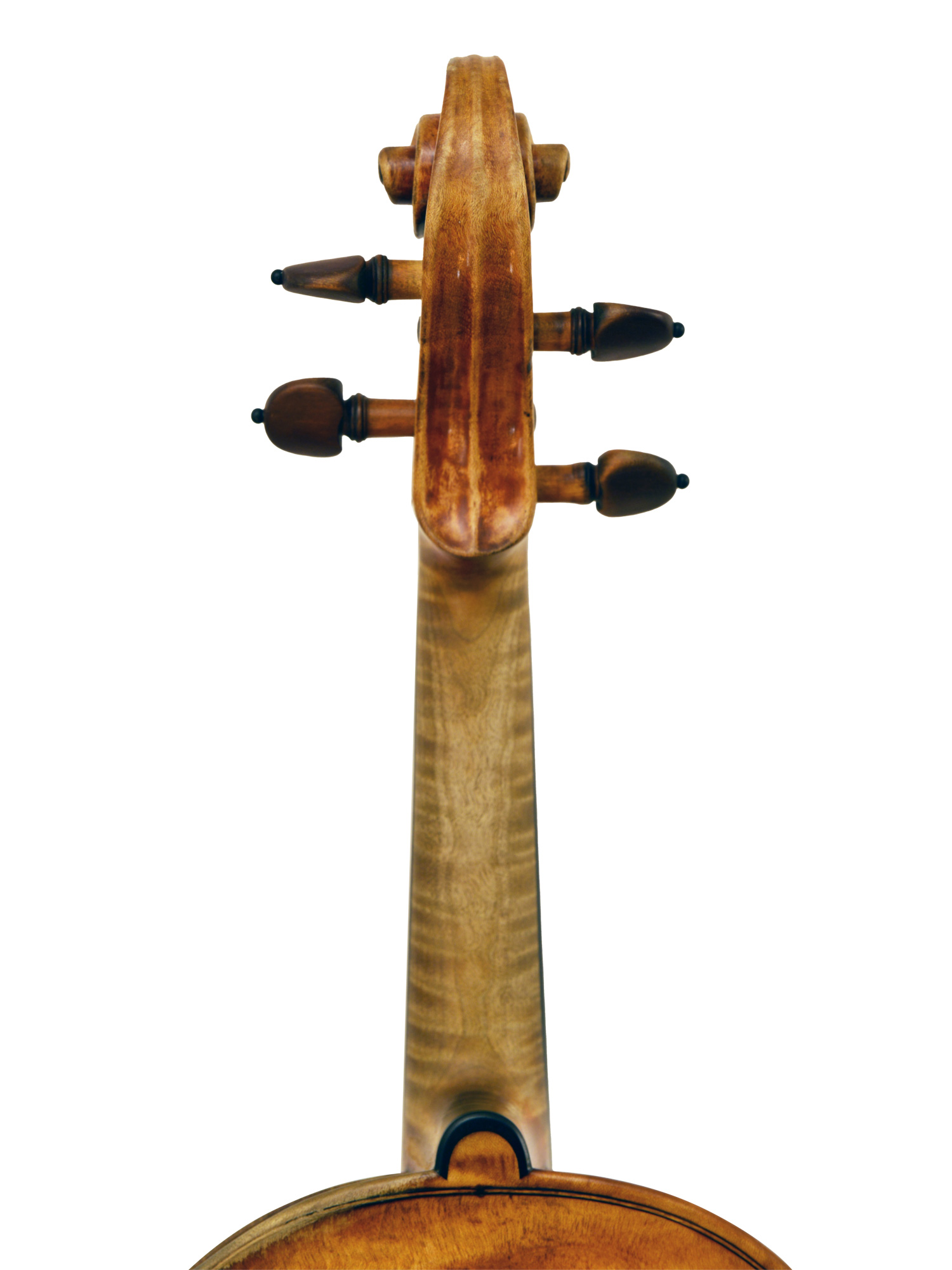
Antonio Stradivari 1708 “The Carrodus”
Antonio Stradivari is the most renowned and influential maker in the history of stringed instruments. His long and extraordinarily productive life in Cremona epitomizes what is commonly referred to as the “Classical Period” of violin making, and his instruments continue to be regarded by both performers and collectors as the supreme standard to which all others are compared.
Building upon the traditions established by Andrea Amati and the Amati family of Cremona, Stradivari achieved unprecedented innovation in structure, acoustics, and aesthetic design. The level of refinement attained in his work exerted an immeasurable influence on subsequent generations of makers and remains, to this day, an enduring ideal.
This violin, made in Cremona in 1708 by Antonio Stradivari’s own hand, later became the principal instrument of the celebrated violinist John Carrodus. As a result, it is widely known in the musical literature as the “Carrodus” Stradivari.
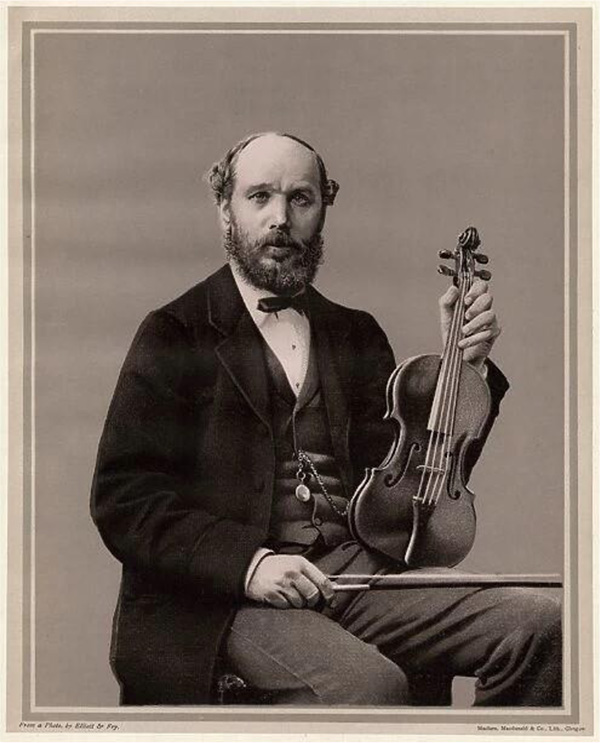
John Carrodus was born on January 20, 1836, in Keighley, West Riding of Yorkshire, England. His father, Thomas Carrodus, was both a barber and a musical instrument dealer, and it was from him that Carrodus received his earliest violin instruction. He made his first public appearance at the age of nine and was already performing in London by the age of thirteen, demonstrating remarkable talent from an early age.
Between the ages of twelve and eighteen, he studied in Stuttgart under Bernhard Molique. During this formative period, Carrodus developed a deep admiration for the music of Louis Spohr, who is said to have held Carrodus’s playing in high esteem.
After returning to England in 1853, Carrodus began his professional career with the support of Sir Michael Costa, performing with leading orchestras. In 1855, he became a member of the orchestra at Covent Garden, and in 1863 he made his debut as a soloist at a concert organized by the London Musical Society. In 1869, he succeeded Prosper Sainton as concertmaster of the same society, a position he held for twenty-five years. In 1882, he also served as concertmaster of the Three Choirs Festival.
Carrodus was highly respected as a pedagogue and taught at many of Britain’s foremost music institutions, including the Royal Academy of Music, the Guildhall School of Music, and Trinity College. He also served as the first president of the College of Violinists, contributing significantly to the advancement of violin playing in Britain.
A recital he gave on January 20, 1881, at St. James’s Hall in London—featuring works primarily by Molique and Spohr—is widely recognized as the first public violin recital in history.
Driven by a strong sense of responsibility to raise performance standards, Carrodus imposed rigorous demands upon both himself and his pupils. Among the instruments he used were a 1743 Giuseppe Guarneri “del Gesù” and this 1708 Antonio Stradivari, both of which have since come to be known by the name “Carrodus.”
John Carrodus died on July 13, 1895, in Hampstead, London, and was laid to rest in the family grave on the eastern side of Highgate Cemetery. As a performer, teacher, and pioneer, he left an indelible mark on the history of British violin playing.
This violin represents a quintessential example of Antonio Stradivari’s so-called Golden Period, fully embodying the distinctive style and individuality he established after 1700. It is an instrument of exceptional rarity and historical importance.
The model employed is the large-format “PG” form, and the overall proportions are in near-perfect balance. The back is crafted from a striking one-piece maple with vivid flame, while the table is made from exceptionally fine-grained, high-quality spruce. The careful selection of materials, combined with the consummate refinement of the workmanship, elevates this instrument to the level of a true masterpiece.
When compared with Stradivari’s later works—often described as more powerful or “masculine” in character—this violin retains the delicacy and elegance characteristic of the early Golden Period. Its presence conveys a special charm, evident both in its tonal qualities and in its visual beauty.
Of particular note is the maple used for the back, which is believed to have been cut from the very same tree as three other celebrated Stradivari violins made in 1708: the “Ruby,” “Davidoff,” and “Tua.” This remarkable fact further enhances the instrument’s historical and documentary significance.
In addition to being John Carrodus’s personal instrument, this violin was later played by some of the greatest violinists of the twentieth century, including Yehudi Menuhin and Itzhak Perlman. Today, it is widely regarded as one of the finest-sounding Stradivari violins in existence, distinguished above all by the exceptional beauty of its tone.
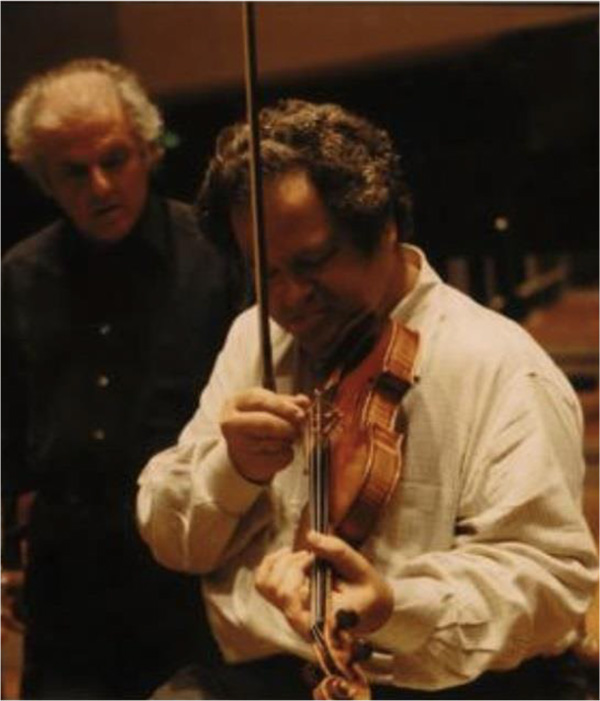
✴︎D. Baremboim, I. Perlman and the “Carrodus” violin during rehearsals